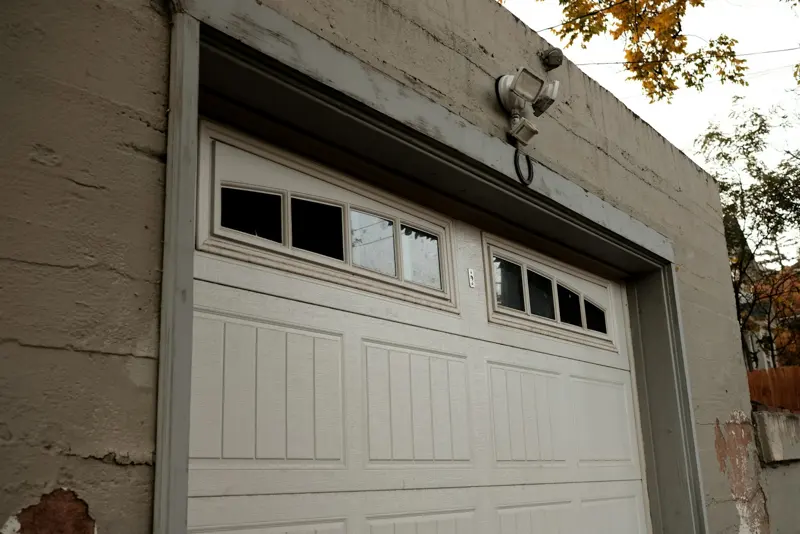
Winter
Cold steel and stiff grease: peak season for spring breaks.
Safety first
Short answer: automatic garage door openers made for sale in the U.S. on or after January 1, 1993 must have entrapment protection, usually a pair of photo-eye sensors near the floor. The U.S. Consumer Product Safety Commission (CPSC) urges owners to test the reversing feature each month and to have the door adjusted or inspected if it fails.
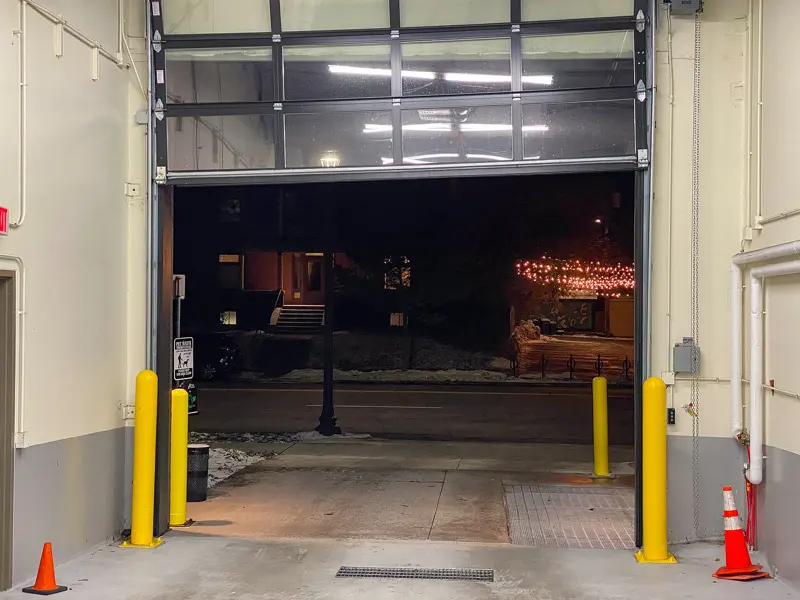
A garage door is the largest moving object in most homes. When an opener drives it closed, it can trap anything in its path. In announcing the final rules in 1992, the CPSC said it had received reports since 1982 of 54 children between the ages of 2 and 14 who died after becoming trapped under doors with automatic openers.
Congress responded in the Consumer Product Safety Improvement Act of 1990. Openers made on or after January 1, 1991 had to meet the entrapment protection part of the Underwriters Laboratories standard UL 325. Openers made on or after January 1, 1993 had to meet added requirements, which the CPSC put into federal rules at 16 CFR Part 1211.
Under the rule, a residential opener must reverse when the door hits an object while closing. On top of that, it must have one of two added protections. The first is an external device that senses something in the doorway without touching it, such as an electric eye, or a door edge sensor that works like the safety edge on an elevator door.
The second is a constant-contact wall button, which only closes the door while you hold the button down. With that setup, a remote cannot close the door.
Almost all modern home openers use photo-eyes. The federal standard sets how they must work. When the beam is blocked while the door is closing, the door must reverse and go back to the fully open position, and the opener must not close an open door while the beam is blocked.
The rule also sets the size of the test object the sensors must detect near the floor.
New openers must also carry a warning label about entrapment near the wall control.
The CPSC advises owners to test openers according to the maker's instructions to make sure they have a reversing feature, and then to test it monthly. Your opener's manual describes the exact test for your model, so keep it handy or find it on the maker's website.
A simple routine many owners use: first, with the door open, wave an object such as a broom handle through the photo-eye beam while the door is closing. It should stop and go back up. Second, follow the manual's contact-reverse test, which usually means placing a solid object on the floor in the door's path and checking that the door reverses after touching it.
Keep people, pets and cars clear during every test.
If the door does not reverse, stop using the opener to close the door until it is fixed. The CPSC advises adjusting the door according to the owner's manual or having it inspected by a professional.

Photo-eyes are mounted a few inches above the floor, which puts them right where life happens. Brooms, bikes, storage bins and kids' toys knock them out of line. When the two sensors no longer face each other, many openers will refuse to close the door, or the light on a sensor will blink.
Winter adds its own problems in Johnson County. Snow and slush tracked in on cars can splash and cover the lenses, and road salt can leave a film. Clean the lenses gently with a soft cloth. Low sun in the morning or late afternoon can also shine straight into a sensor on some east- or west-facing garages and confuse it.
Wiring is the other weak spot. The thin low-voltage wires run along the wall and are easy to staple through, chew or pinch. Our safety sensor repair page covers alignment, wiring and sensor replacement.
If the sensors are clean and lined up but the door still does not reverse properly, the force settings, the travel limits or the opener itself may need service. Openers made before 1993 may not meet the federal rule at all. If yours has no photo-eyes and no constant-contact control, plan to replace it.
A door that is hard to move by hand also strains the opener and can make the reverse feature act strangely. Broken springs, worn rollers and frayed cables are common causes. See our garage door opener repair and garage door spring repair pages for those fixes.
Keep remotes away from young children, and teach kids not to play under or near a moving door. Do not walk or run under a closing door. Keep the floor area near the sensors clear. Add the monthly test to a routine, such as the day you change a furnace filter or check smoke alarms.
Our garage door maintenance guide lists other checks worth doing a few times a year.
On a safety check, a technician usually starts with the door itself. They lift it by hand to see whether the springs hold it balanced, look at the cables, rollers and hinges, and check the tracks for bends or loose brackets. A door that is out of balance can make the opener work too hard and throw off the reverse settings.
Next comes the opener. That includes the force and travel settings, the photo-eye alignment and wiring, and the wall control. The technician runs the reverse tests, adjusts what needs adjusting, and tells you if any part is worn out. You should leave the visit knowing whether the door passed and what, if anything, still needs work.
Many Overland Park neighborhoods have homes built long before 1993, and some still have their first opener. If yours has no photo-eyes near the floor and no hold-to-close wall button, it does not meet the current federal rule. Replacing it is the safest choice. A new opener also gives you current security features and quieter drives, but safety is the main reason to change.
If you rent out a home or are getting ready to sell, a working auto-reverse is an easy item for an inspector or tenant to check. Run the tests, fix any problem, and keep a note of the date. It is a small step that avoids questions later.
In a Kansas winter, a door can freeze to the floor or the bottom seal can stiffen. When that happens, the opener may sense resistance and reverse, or strain against the ice. Clear ice and snow from the door's path, and do not raise the force setting to push through it, because a higher force makes the door less safe for people and pets.
CPSC news release: Safety Commission publishes final rules for automatic garage door openers; federal rule 16 CFR Part 1211.
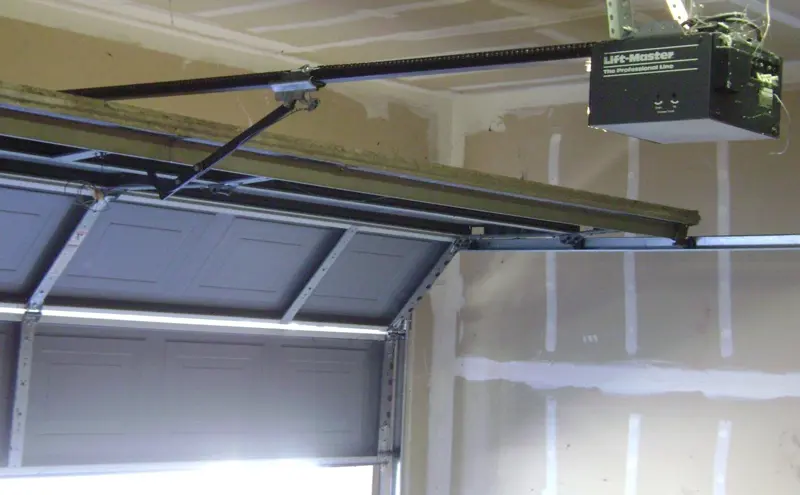
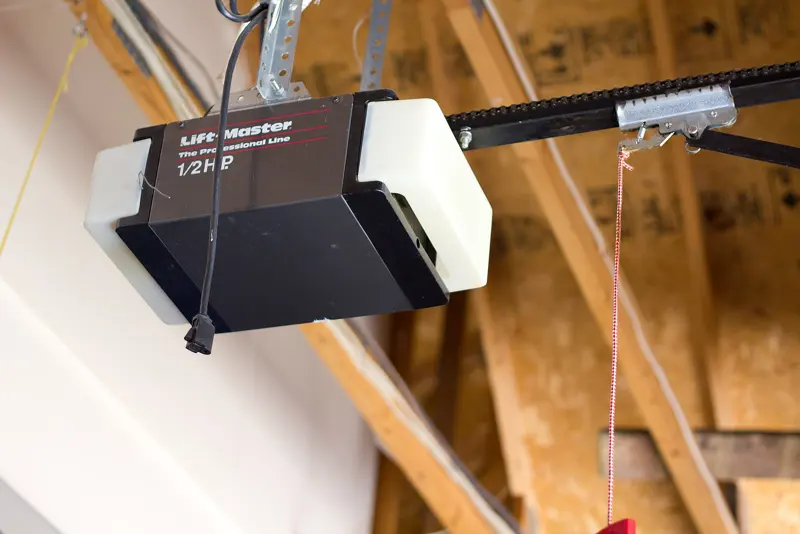
Why trust us
Same-day visits are often available, depending on technician schedules.
Ask for parts and labor in writing before a technician touches the door.
Balance and auto-reverse checks are part of a proper repair.
Overland Park, Olathe, Lenexa, Shawnee and nearby towns.
Seasonal guide
Cold steel and stiff grease: peak season for spring breaks.
Storms knock sensors and dent panels.
Heat can swell wood doors and warp weather seals.
Ideal for a tune-up before the first hard freeze.
Questions
The CPSC advises testing the reversing feature monthly, following your opener maker's instructions.
Openers made for U.S. sale on or after January 1, 1993 must have entrapment protection, such as photo-eyes, an edge sensor or a constant-contact control. Older openers may not.
Usually the photo-eyes are out of line, dirty or have a wiring fault. Clean and realign them, and check the wires.
No. They are a federal safety requirement and protect people and pets. Fix or replace faulty sensors instead.
Reach a garage door technician who works Overland Park.
Ready when you are
Pick the service, tell us your timing, and add your contact details. A local pro follows up to confirm the details.