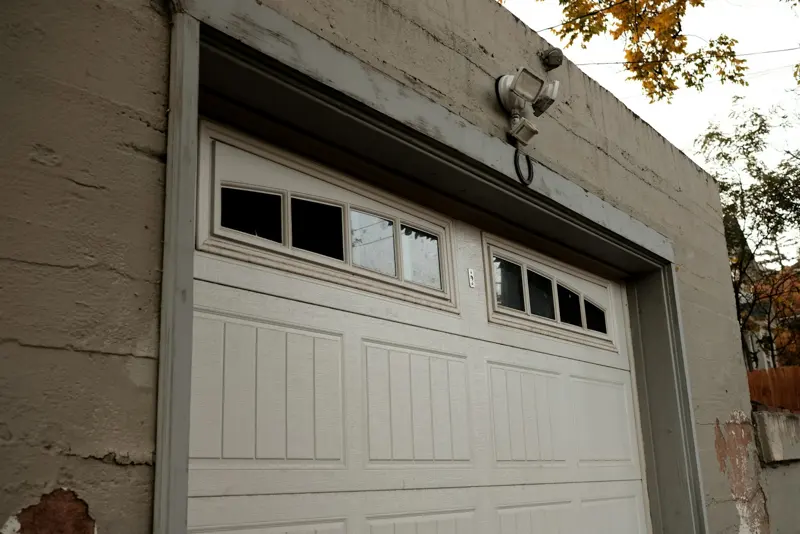
01Common opener problems
Misaligned or dirty safety sensors, stripped drive gears, worn trolley carriages, dead remotes, travel limits drifting out of adjustment and failed logic boards. Power outages and storms can also damage boards.
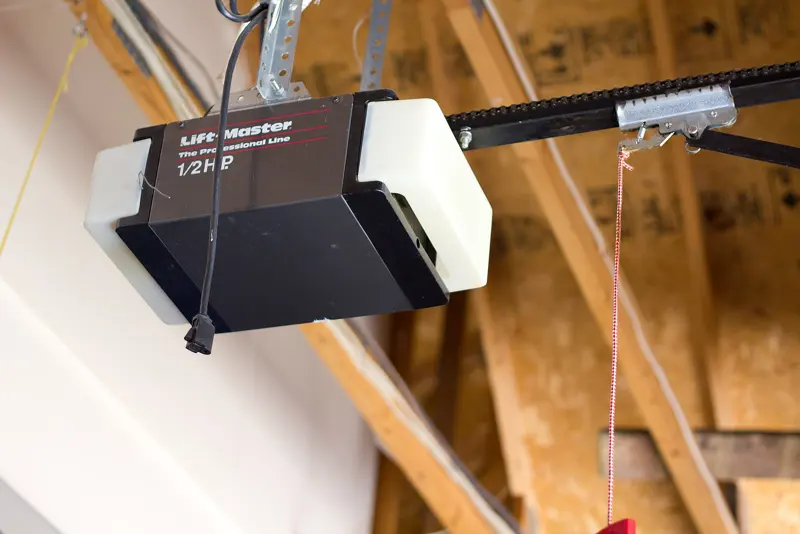
02Repair or replace
Older openers without rolling code security or battery backup may be worth replacing. Belt drives are quieter for garages under bedrooms; chain drives are durable; wall-mount jackshaft units open up ceiling space.
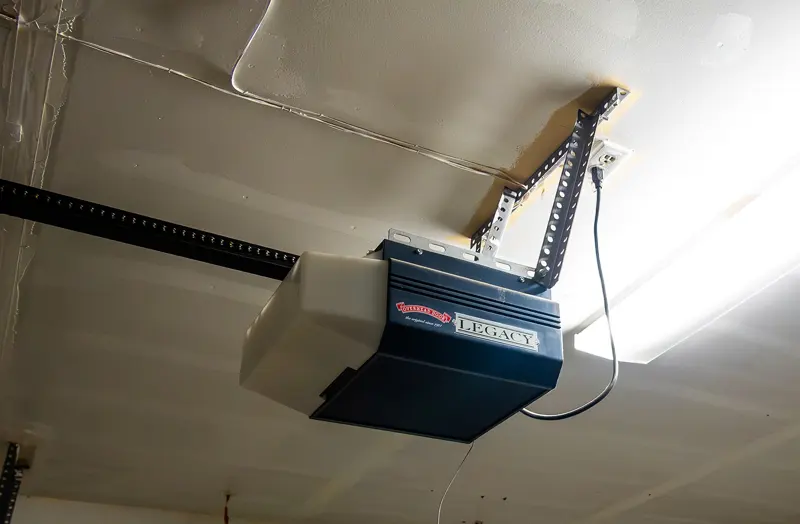
03Check the door first
An opener cannot fix a heavy, unbalanced door. If springs are worn, fix them first with garage door spring repair.
04Diagnosing before replacing
A technician should first release the opener and lift the door by hand. If the door is heavy or binding, the opener is not the root problem. Common real opener faults include stripped drive gears, worn trolley carriages, failed logic boards, dead remotes and limit switches that have drifted.
Sensors are the most frequent cause of a door that reverses. They sit a few inches off the floor and are easy to bump with a bike, a trash can or a shovel.
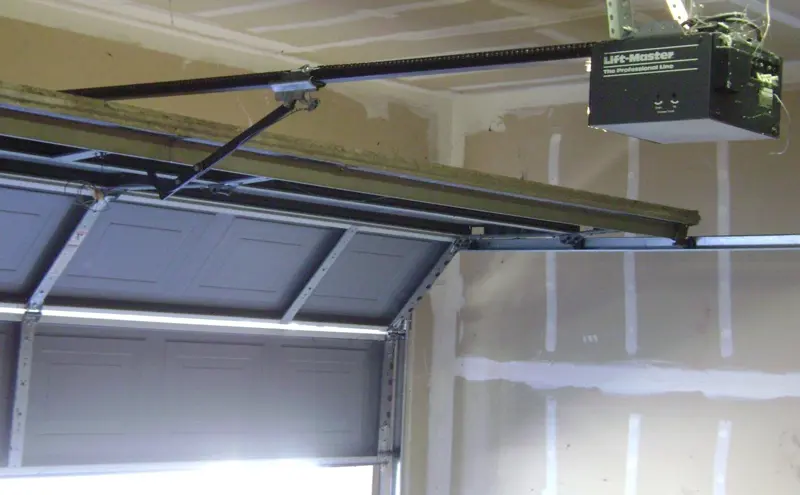
05Choosing a replacement opener
Chain drives are durable and suit detached garages. Belt drives are quieter for garages under bedrooms. Wall-mount (jackshaft) units clear the ceiling for storage racks and work with high-lift track. Battery backup helps during summer storm outages, and smart-phone control is now common on new units.
Symptom to cause
Opener symptoms and what they point to
| Symptom | Likely cause |
|---|---|
| Motor hums, door stays | Broken spring or stripped gear |
| Door reverses near floor | Sensor out of line or dirty |
| Remote fails, wall button works | Remote battery or programming |
| Light flashes | Safety sensor fault |
Johnson County homes
How this repair fits local garages
Opener age
Openers in homes built 15 to 20 years ago often have worn gears and older sensors.
Safety reverse
Openers sold since 1993 must have automatic reversing systems.
Cold mornings
Cold slows openers and stiffens grease.
Smart features
Newer models offer battery backup and app control.
Decision help
Repair, replace or wait?
Opener hums, door doesn't move
Gear or capacitor.
Door reverses for no reason
Sensors.
Remote doesn't work
Battery or reprogramming.
No sensors
Replace.
Repair or replace
Compare age and price.
Local scenarios
What this looks like around Overland Park
An opener from when the house was built. Openers in homes 15 to 20 years old often have worn drive gears. Replacing the gear may be cheaper, but compare it with a new opener that adds battery backup.
A door that reverses for no reason. Sensors knocked out of line by a bike or a shovel are common. Realigning them fixes it.
Slow opener on cold mornings. Check spring balance and lubricate tracks first.
No sensors at all. Replace the opener for safety.
What to expect
How the visit usually goes
- Test Balance and sensors.
- Diagnose Gears, board, sensors.
- Quote Repair vs replace.
- Fix Install parts.
- Test Reversal.
Before you book
Questions to ask the tech
Brand?. Ask what they service.
Battery backup?. Ask.
Warranty?. Ask.
Price?. Written.
Avoid these
Common mistakes
Turning up the force setting
Raising force to make a struggling opener work hides a spring problem and weakens safety reversal.
Ignoring sensor alignment
Misaligned sensors cause random reversals and should be realigned, not bypassed.
Buying an undersized opener
A heavy wood or wide insulated door needs an opener rated for it.
Skipping the balance test
Check that springs carry the door's weight before replacing an opener.
Using household oil on the rail
Use a garage-door lubricant where the manual allows; some belt and screw drives need specific products.
Skipping battery backup
An opener with battery backup keeps working through the power outages that summer storms can bring.